


 Venus
Venus
 Water
Water
Divine Power
Embodies infinite compassion and relieves suffering.
Goddess of Mercy
Embodies infinite compassion and relieves suffering.
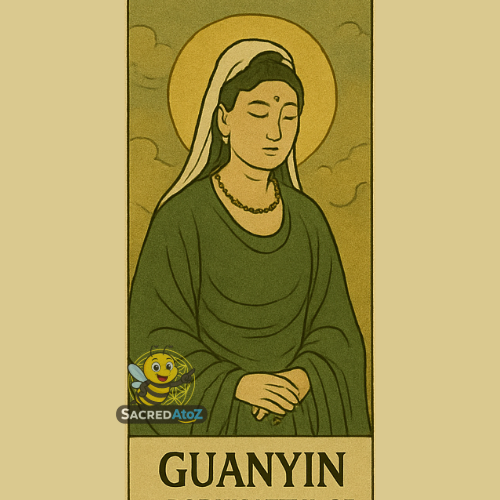
In the cosmic epoch when the Buddhist dharma first began its transformative journey across cultural boundaries, when the compassionate wisdom of Avalokiteshvara sought new forms of expression that could reach the hearts and minds of Chinese consciousness while adapting to indigenous spiritual traditions and cultural values, there occurred one of the most remarkable divine transformations in religious history—the gradual emergence of Guanyin, whose name means "She Who Hears the Cries of the World" and whose gentle presence would become synonymous with unlimited compassion, protective mercy, and the profound understanding that authentic spiritual authority manifests through the willingness to respond immediately to all beings' suffering regardless of their social status, moral condition, or spiritual development, demonstrating that genuine divine love transcends conventional boundaries and flows like infinite water toward any consciousness experiencing pain, fear, or desperate need for assistance and guidance.
The most ancient Chinese Buddhist traditions preserved in the deepest compassion mysteries speak of Guanyin's emergence not through dramatic divine birth but through the patient cultural transformation of Avalokiteshvara's compassionate essence as it encountered Chinese feminine archetypes, Taoist understanding of receptive wisdom, and Confucian ideals of nurturing care that honored maternal authority as the foundation of beneficial social order. Her manifestation occurred when Buddhist compassion achieved sufficient cultural resonance to assume indigenous forms while maintaining essential spiritual functions and unlimited responsiveness to suffering.
Unlike other deities who emerged through mythological narratives or inherited divine status, Guanyin manifested through lived spiritual experience—the gradual recognition among Chinese practitioners that compassionate response to suffering naturally assumes feminine forms, that unlimited mercy expresses itself through maternal care, and that the most accessible divine presence often appears in forms that mirror the nurturing relationships that provide comfort, protection, and guidance during life's most challenging moments and desperate circumstances.
The sacred Chinese texts describe how Guanyin's first recognizable manifestation occurred when practitioners began experiencing visions of a graceful feminine presence who responded instantly to prayers for assistance, who provided comfort during times of grief and desperation, and who demonstrated that authentic spiritual authority serves rather than judges those who seek divine help. Her initial activities involved establishing herself as the compassionate mother figure who could bridge the gap between transcendent Buddhist wisdom and immediate human need for practical assistance and emotional support.
Her recognition as the supreme goddess of mercy occurred when Chinese Buddhism acknowledged that compassionate response to suffering required not only philosophical understanding of emptiness and interdependence but also immediate practical assistance to beings experiencing pain, fear, poverty, illness, and the various forms of distress that characterize embodied existence in samsara. Her authority derived from demonstrated effectiveness in providing help rather than theoretical knowledge about ultimate reality.
Yet Guanyin's role as mercy goddess was never mere emotional comfort but transformative wisdom—the understanding that authentic compassion addresses both immediate suffering and its underlying causes, that genuine spiritual assistance serves both temporal welfare and ultimate liberation, and that sustainable divine help enables rather than creates dependency by teaching beings how to develop their own compassionate capacity and spiritual strength.
From her cultural emergence, Guanyin embodied the fundamental principle that would define her eternal significance: the recognition that authentic spiritual authority manifests through unlimited responsiveness to suffering, that genuine divine compassion transcends all conventional boundaries and limitations, and that sustainable mercy emerges from understanding all beings as interconnected expressions of the same fundamental nature requiring mutual care and support rather than competitive advantage or superior status.
The mystery traditions taught that Guanyin's transformation represented the cosmic principle that divine compassionate consciousness, when properly aligned with cultural wisdom and maternal archetypes, becomes the responsive force that enables rather than prevents beneficial adaptation to local needs while maintaining universal spiritual principles and unlimited accessibility to all beings regardless of their circumstances, achievements, or understanding.
Her establishment as the Chinese goddess of mercy created the understanding that compassionate response to suffering serves as the foundation for all authentic spiritual practice, that unlimited mercy provides the most direct path to understanding interdependence and emptiness, and that maternal divine love offers the most accessible introduction to the transcendent wisdom that recognizes the illusory nature of separation while working tirelessly to alleviate the suffering that separation appears to create.
Buddhist Lineage: Avalokiteshvara, the bodhisattva of compassion whose essence she embodies while adapting to Chinese cultural forms and feminine archetypes
Cultural Ancestry: Chinese maternal goddesses and nurturing deities who provided the indigenous framework for her compassionate manifestation
Spiritual Offspring: All practitioners who develop genuine compassion and dedicate themselves to alleviating suffering for all beings
Divine Companions: The thousand arms and eyes that enable her to perceive and respond to unlimited forms of suffering throughout all realms
Human Devotees: Mothers, healers, social workers, and all who embody mercy and compassionate service in their daily lives and professional activities
Sacred Locations: Mount Putuo and other pilgrimage sites where her presence is particularly accessible to those seeking assistance and guidance
Animal Associations: White elephants (representing wisdom and gentle strength), dragons (symbolizing transformative power), and doves (marking peaceful resolution)
Elemental Connections: Water (representing flowing compassion), willow branches (symbolizing flexibility and healing), and lotus flowers (marking pure compassion arising from suffering)
Cultural Manifestations: The various forms and iconographies through which she appears to meet different cultural needs and spiritual circumstances
Cosmic Function: The divine consciousness that responds immediately to all forms of suffering while guiding beings toward ultimate liberation and enlightenment
Guanyin's approach to relationship reflects her fundamental nature as the compassionate mother goddess whose primary commitment is to the unlimited responsiveness that alleviates suffering for all beings while guiding them toward spiritual development and ultimate liberation from the cycles of pain that characterize unenlightened existence. Her "marriages" are primarily spiritual partnerships with the various forms of compassionate activity that together enable effective response to the infinite varieties of suffering that conscious beings experience throughout their journey toward awakening and beneficial cooperation.
Her most significant relationship exists with suffering itself—the eternal partnership between unlimited compassion and the pain that calls forth merciful response, demonstrating that authentic spiritual authority emerges through willingness to engage directly with rather than avoid or transcend the difficulties that characterize embodied existence. This cosmic marriage shows that genuine divine love transforms rather than eliminates suffering by providing the comfort, guidance, and wisdom that enable beings to work skillfully with their challenges while developing greater compassion for others.
Her relationship with motherhood embodies the partnership between divine compassion and maternal care, showing how authentic spiritual authority naturally assumes nurturing forms that provide both comfort and guidance, both immediate assistance and long-term wisdom for beneficial development. This relationship demonstrates that genuine mercy serves both emotional needs and spiritual growth, both temporal welfare and ultimate liberation from the causes of suffering.
Her connection to healing practices represents the partnership between compassionate intention and skillful means, demonstrating how authentic spiritual response addresses both symptoms and underlying causes of distress while empowering recipients to develop their own capacity for healing and helping others. This relationship shows that sustainable mercy creates rather than prevents individual strength and community resilience.
The cultural significance of Guanyin's approach to relationship influenced Chinese concepts of feminine spiritual authority, compassionate governance, and the proper relationship between wisdom and practical assistance. Her example demonstrated that authentic spiritual power serves rather than dominates those seeking help, that genuine divine authority provides guidance rather than commands obedience, and that sustainable compassion enables rather than creates dependency.
Her eternal availability to all beings represents the principle that authentic spiritual authority involves unlimited accessibility rather than exclusive relationships, that genuine divine compassion transcends conventional boundaries and limitations, and that sustainable mercy emerges from understanding all consciousness as interconnected expressions of the same fundamental nature requiring mutual care and support.
Her relationship with Buddhist practice and enlightenment demonstrates the ongoing partnership between compassionate activity and wisdom development, showing how authentic mercy serves both immediate relief and ultimate liberation, both temporal assistance and spiritual awakening for all beings who open themselves to receiving help while developing their own capacity for beneficial service.
Compassion: Guanyin wielded unlimited mercy and responsive care for all beings experiencing suffering, commanding devotion not through displays of power or demands for worship but through demonstrated effectiveness in providing comfort, assistance, and guidance during times of greatest need and desperation. Her compassion was both infinite and immediate—infinite because it extended to all beings regardless of their circumstances or worthiness, immediate because she responded instantly to sincere calls for help without requiring lengthy procedures or complex rituals. Every prayer answered honored her responsive care, every comfort provided reflected her merciful presence, and every being helped demonstrated her unlimited accessibility and genuine concern for universal welfare.
Wisdom: Guanyin possessed the profound understanding that recognizes the interconnected nature of all existence while maintaining skillful engagement with the apparent separations that create suffering, enabling her to provide both immediate practical assistance and ultimate guidance toward liberation from the fundamental causes of pain and confusion. Her wisdom was both transcendent and practical, both ultimately empty of inherent existence and immediately responsive to the conventional needs of beings who experience themselves as separate and vulnerable.
Gentleness: Perhaps Guanyin's most distinctive quality was her infinite gentleness that approached all beings with maternal tenderness regardless of their behavior, circumstances, or spiritual development, demonstrating that authentic spiritual authority serves rather than judges those who seek divine assistance. Her gentleness was both absolutely non-violent and ultimately transformative, both immediately comforting and gradually liberating for all who opened themselves to receiving her merciful care and guidance.
Accessibility: Above all, Guanyin embodied the divine principle that authentic spiritual help must be immediately available to anyone who sincerely requests assistance, that genuine compassion transcends all conventional boundaries and limitations, and that sustainable mercy requires no qualifications, prerequisites, or advance preparation from those experiencing suffering and desperate need for divine intervention.
Patience: Guanyin represented the cosmic understanding that spiritual development requires time and supportive conditions rather than forced acceleration or demanding expectations, demonstrating that genuine divine authority provides ongoing guidance and repeated assistance rather than single interventions or conditional help based on recipients' progress or worthiness. Her patience was both infinite and practical, both ultimately spacious and immediately responsive to current needs.
Adaptability: Guanyin embodied the spiritual wisdom that assumes whatever forms are most helpful for particular beings in specific circumstances, appearing as mother, healer, protector, or guide according to individual needs while maintaining essential compassionate function. Her adaptability was both unlimited and authentic, both responsive to cultural variations and consistent in fundamental mercy.
Transformation: Guanyin demonstrated the divine capacity to transform suffering into wisdom, fear into confidence, and desperation into hope through the power of unlimited compassion combined with skillful understanding of how to address both immediate symptoms and underlying causes of distress. Her transformative power was both gentle and effective, both immediately comforting and ultimately liberating for all beings who received her merciful assistance and guidance toward spiritual development and beneficial service to others.
Guanyin's relationships throughout the spiritual and cultural realms consistently reflected her role as the compassionate mother goddess whose unlimited mercy and responsive care served to establish practices, understanding, and institutions that would enable all beings to receive appropriate assistance during times of suffering while developing their own capacity for compassionate service and spiritual development. Her fertility was primarily spiritual and cultural, generating not only immediate relief for those in distress but also the wisdom traditions and compassionate practices that enable communities to embody mercy while supporting individual growth toward enlightenment and beneficial cooperation.
Her primary creative achievement was the establishment of accessible spiritual practice that requires no special qualifications, advanced preparation, or complex understanding—simply sincere request for help combined with openness to receiving guidance and assistance. Guanyin's demonstration that divine mercy responds immediately to authentic need created spiritual patterns that honor both universal accessibility and individual circumstances requiring particular forms of care and support.
Her relationship with healing traditions produced cultural offspring in the form of medical practices, therapeutic approaches, and caring professions that integrate practical skill with compassionate intention while serving both physical wellness and spiritual development. Her influence on healing arts established understanding that authentic medicine addresses both symptoms and underlying causes of suffering while empowering patients to participate actively in their own recovery and service to others.
Her influence on maternal and feminine spirituality created spiritual offspring in the form of goddess traditions, women's religious practices, and the understanding of feminine divine authority as naturally compassionate, nurturing, and responsive to suffering rather than commanding, judgmental, or requiring submission. Her gifts to feminine spiritual development included both validation of women's religious experience and guidance for expressing compassion through practical service and spiritual practice.
Her protection of vulnerable populations produced institutional offspring in the form of charitable organizations, social services, and advocacy movements that serve those experiencing poverty, illness, oppression, or other forms of suffering while working to address systemic causes of distress. Her influence on social action established principles that integrate immediate assistance with long-term transformation, individual care with collective welfare.
The devotional traditions associated with Guanyin's worship developed comprehensive approaches to spiritual practice that address both personal development and compassionate service, recognizing that authentic spiritual growth requires both cultivation of wisdom and active engagement with alleviating suffering for all beings. Her gifts to religious practice included both techniques for developing compassion and understanding of how mercy serves both temporal welfare and ultimate liberation.
Her continuing influence throughout East Asian cultural development demonstrates the enduring relevance of her understanding that spiritual authority emerges through compassionate service rather than hierarchical position, that authentic religious practice serves rather than transcends engagement with suffering, and that genuine enlightenment manifests through unlimited responsiveness to the needs of all beings.
Her relationship with contemporary movements for social justice, environmental protection, and compassionate service reflects Guanyin's ancient wisdom that spiritual development requires practical engagement with alleviating suffering, that authentic awakening serves rather than abandons world welfare, and that sustainable spiritual practice integrates personal transformation with beneficial service to all life forms and communities.
The Thousand Arms and Eyes of Limitless Compassion: The foundational myth describes how Guanyin developed her thousand arms and eyes in response to witnessing the overwhelming extent of suffering throughout all realms of existence, each hand representing a different skillful means for helping beings while each eye perceives specific forms of distress requiring immediate attention and appropriate response. This miraculous transformation demonstrates that authentic compassion naturally develops whatever capacities are necessary for effective service, that genuine spiritual development enables rather than limits responsive ability, and that unlimited mercy manifests through practical rather than merely theoretical engagement with suffering.
The Fish Basket Guanyin and Skillful Adaptation: When a community of fishermen proved resistant to Buddhist teachings, Guanyin manifested as a beautiful young woman carrying a fish basket who offered to marry whoever could memorize specific sutras, ultimately guiding the entire community toward spiritual understanding through their attraction to her beauty and their effort to win her hand. This myth demonstrates that authentic spiritual authority adapts to local circumstances and cultural preferences while maintaining essential functions, that genuine compassion uses whatever means are effective for particular beings, and that skillful methods serve rather than manipulate those requiring guidance.
The Princess Miaoshan and Filial Sacrifice: The complex myth describing how Guanyin manifested as Princess Miaoshan, who sacrificed her eyes and arms to create medicine for her father the king, demonstrating filial piety while establishing her authority as a healing goddess who understands both the importance of family relationships and the ultimate priorities of compassionate service. Her miraculous restoration with thousand arms and eyes represents the principle that authentic sacrifice for others' welfare results in enhanced rather than diminished capacity for beneficial service, that genuine spiritual authority emerges through demonstrated willingness to give rather than receive.
Guanyin's worship centered around accessible temples and household shrines throughout China and East Asia where her presence was honored through simple, heartfelt practices that emphasized direct communication with her compassionate consciousness rather than complex rituals or theological understanding. Her primary cult sites, particularly Mount Putuo and urban temples in major cities, served as refuges for those experiencing distress while providing communities with focal points for compassionate practice and mutual support during times of collective challenge or individual crisis.
Her devotees included people from all social classes and backgrounds who understood that sincere request for help required no special qualifications, advanced spiritual development, or complex ritual knowledge—simply honest acknowledgment of need combined with openness to receiving guidance and assistance. These practitioners served as examples of accessible spirituality that emphasized practical compassion rather than theoretical understanding, immediate responsiveness rather than delayed intervention.
Sacred practices included simple prayer and offering that could be performed by anyone in any circumstances, meditation on her compassionate presence that developed practitioners' own capacity for mercy, and acts of service that embodied her responsive care through practical assistance to those experiencing suffering. The most important observances occurred during times of personal or collective crisis when her immediate help was most urgently needed and gratefully received.
Her sacred symbols reflected different aspects of her compassionate authority and responsive mercy: the lotus flower represented pure compassion arising from suffering, willow branches symbolized gentle flexibility and healing power, water vessels honored her flowing mercy and cleansing capacity, and various protective amulets demonstrated her power to shield devotees from harm. Sacred colors included white (representing purity and peace), green (symbolizing healing and growth), and gold (marking divine compassion and precious mercy).
Her festivals involved entire communities in celebrations that combined religious devotion with practical compassionate service, demonstrating that authentic worship manifests through beneficial action rather than mere ritual observance. These events featured charitable activities that embodied her mercy through assistance to the poor and suffering, healing ceremonies that channeled her therapeutic power, and communal prayers that strengthened collective commitment to compassionate practice and mutual support.
Local shrines throughout East Asia maintained her daily worship through practices that integrated spiritual development with practical service: morning prayers that requested her guidance for compassionate activity throughout the day, offerings that expressed gratitude for assistance received while demonstrating willingness to help others, and evening reflection that cultivated the responsive mercy that characterizes her unlimited accessibility to all beings.
Her worship preserved the understanding that authentic spiritual practice requires both personal development and compassionate service, that genuine religious authority emerges through demonstrated effectiveness in alleviating suffering, and the wisdom that recognizes all beings as interconnected expressions of the same fundamental nature requiring mutual care and support rather than competitive advantage or hierarchical domination.
Guanyin's influence on Chinese and East Asian philosophical thought about compassion, spiritual authority, and the relationship between wisdom and practical service was profound and enduring, establishing crucial principles about the nature of authentic religious practice, accessible spirituality, and the integration of transcendent understanding with immediate responsiveness to suffering that guided Buddhist adaptation to indigenous cultures while maintaining essential dharma functions. She embodied the revolutionary concept that genuine spiritual authority manifests through unlimited accessibility rather than exclusive privilege, that authentic enlightenment serves rather than transcends engagement with suffering, and that sustainable religious practice requires both personal transformation and beneficial service to all beings.
Her role as the compassionate goddess who responds immediately to all sincere requests for help provided the philosophical framework for understanding the relationship between ultimate wisdom and conventional compassion, between transcendent emptiness and practical mercy, between enlightened understanding and engaged response to the apparent suffering that characterizes unawakened existence. Her example demonstrated that authentic spiritual development enables rather than prevents responsive care, that genuine wisdom serves rather than judges those experiencing difficulties.
The principle that emerged from Guanyin's worship—that compassionate response to suffering provides the most direct path to spiritual understanding—influenced Chinese Buddhist concepts of practice, enlightenment, and the proper relationship between meditation and service, between personal development and social engagement. Her example taught that genuine spiritual authority emerges through demonstrated willingness to help rather than claims of superior understanding, that authentic religious practice serves rather than transcends worldly welfare.
Her synthesis of unlimited compassion with practical effectiveness established crucial concepts about the relationship between spiritual ideals and skillful implementation that influenced East Asian approaches to religious practice, social organization, and the integration of transcendent wisdom with immediate practical needs. Her influence taught that authentic spiritual development requires both cultivation of unlimited compassion and acquisition of skillful means for expressing that compassion effectively in particular circumstances.
Her emphasis on maternal and feminine forms of spiritual authority influenced philosophical thinking about the relationship between gender and religious power, establishing understanding that authentic spiritual leadership naturally embodies nurturing, responsive, and inclusive rather than dominating, exclusive, or hierarchical characteristics. Her legacy encouraged recognition that feminine spiritual authority offers essential rather than supplementary approaches to religious understanding and practice.
Her role as the accessible goddess who requires no special qualifications from devotees influenced concepts of democratic spirituality, universal religious accessibility, and the relationship between spiritual development and social inclusion that provided resources for understanding how authentic religious practice serves rather than separates communities. Her example demonstrated that genuine spiritual authority creates rather than maintains barriers to religious participation and spiritual development.
In contemporary international thought, Guanyin's legacy continues to provide philosophical foundation for engaged Buddhism, compassionate activism, and approaches to spirituality that honor both personal transformation and social service. Her example offers guidance for creating religious practices that serve both individual development and collective welfare while demonstrating that authentic spiritual authority emerges through unlimited responsiveness to suffering rather than claims of exclusive access to ultimate truth or superior spiritual achievement.
In traditional Chinese and East Asian art, Guanyin appears as one of the most beloved and psychologically comforting divine images in Buddhist culture, typically portrayed as a graceful feminine figure whose iconography emphasizes both her unlimited compassion and her immediate accessibility to all beings experiencing suffering or seeking guidance. Her artistic representations consistently feature her most distinctive elements: the serene expression that suggests infinite patience and understanding, the flowing robes that represent her gentle approach to all beings, the multiple arms and eyes that demonstrate her capacity to perceive and respond to unlimited forms of distress, and the maternal bearing that provides comfort and confidence to those seeking her assistance.
Paintings and temple sculptures frequently depict Guanyin in poses that emphasize both her transcendent wisdom and her practical responsiveness: standing on lotus petals while blessing devotees with compassionate presence, seated in meditation while remaining alert to calls for help, or manifesting in various forms according to specific needs while maintaining essential merciful functions. These artistic representations demonstrate the integration of ultimate spiritual understanding with immediate practical assistance that characterizes her religious significance and cultural importance.
Ritual objects associated with Guanyin's worship—water vessels, willow branches, lotus flowers, and protective amulets—represent some of the finest examples of Buddhist artistic achievement while serving both spiritual and practical purposes. These sacred artifacts invoke her presence while demonstrating the sophisticated understanding of compassionate practice, healing techniques, and responsive mercy that her worship encouraged and her unlimited accessibility enabled.
Architectural traditions honor Guanyin through the design of temples, shrines, and meditation spaces that provide both practical facilities for worship and symbolic environments that suggest her compassionate presence and protective care. These structures often feature elements that represent both transcendent wisdom and practical mercy, both ultimate emptiness and conventional responsiveness, demonstrating the architectural expression of Buddhist concepts about the unity of wisdom and compassion.
Contemporary Chinese and international artists continue to find inspiration in Guanyin's synthesis of ultimate wisdom with unlimited compassion, often portraying her in works that explore themes of maternal care, social service, and the integration of spiritual development with practical assistance to those experiencing suffering. Modern interpretations frequently emphasize her relevance to current challenges involving social justice, environmental protection, and the need for spiritual approaches that serve both personal transformation and collective welfare.
International movements for engaged Buddhism and compassionate activism have adopted Guanyin as a symbol of responsive spirituality, practical mercy, and the integration of religious practice with social service. Contemporary artistic interpretations often emphasize her role as patron of all who work to alleviate suffering while maintaining spiritual development, who provide compassionate service while cultivating wisdom and understanding.
Feminist and goddess spirituality movements have developed new artistic traditions that honor Guanyin as the divine feminine who embodies spiritual authority through nurturing care rather than dominating power, demonstrating accessible religious leadership and inclusive spiritual community. These contemporary expressions celebrate both the continuing relevance of her archetypal significance and the adaptability of authentic compassionate practice to current challenges involving gender equality, religious accessibility, and democratic spirituality.
Digital and multimedia art forms have found new ways to represent Guanyin's unlimited compassion, responsive mercy, and accessible spiritual authority through interactive installations, virtual reality experiences, and other technologies that can simulate the experience of receiving divine comfort while teaching both traditional meditation techniques and contemporary understanding of compassionate practice, engaged spirituality, and the integration of personal transformation with beneficial service to all beings.
"Guanyin! Avalokiteshvara! Namo Guanshiyin Pusa!"
("Guanyin! She Who Perceives the Sounds of the World! Homage to Guanyin Bodhisattva!")
"When suffering calls and hearts cry out for mercy, when compassion flows like infinite water toward all who need comfort, gentle Guanyin appears with thousand arms of skillful help and the eternal promise of responsive love!"
"Guanyin Pusa, dabei xin,
Qianshou qianyan, wuliang ci,
Namo Guanshiyin, jiuhu wo!"
("Guanyin Bodhisattva, great compassionate heart,
Thousand arms thousand eyes, limitless mercy,
Homage to She Who Hears Sounds, save me!")
"O Guanyin, Divine Mother and Goddess of Infinite Mercy,
You who hear every cry of suffering throughout all worlds,
You whose thousand arms reach out to help all beings in distress,
Grant us the compassion that responds immediately to others' pain,
Wisdom to understand the interconnected nature of all existence,
Gentle strength to provide comfort without creating dependency,
And the skillful means that serve both immediate needs and ultimate liberation.
May your flowing mercy teach us unlimited accessibility to those seeking help,
Your maternal care inspire our own nurturing response to vulnerability,
Your adaptive wisdom guide our efforts to help effectively in specific circumstances,
And your responsive love remind us that authentic spiritual authority
Emerges through demonstrated willingness to serve rather than claims of superiority.
Guanshiyin Pusa, help us embody your example of engaged compassion,
Serving both the alleviation of immediate suffering
And the cultivation of wisdom that addresses underlying causes,
Until all beings achieve liberation from pain
And awaken to the compassionate nature that connects us all."
