


 Water
Water


Divine Power
Bringer of favorable winds and prosperity.

Bringer of favorable winds and prosperity.
In the primordial epoch when the cosmic forces first sought to establish the flowing connections that would enable abundance to circulate throughout creation, when the nascent world required a divine guardian of the maritime realms that would serve as highways for commerce and cultural exchange, there emerged from the deepest mysteries of the Vanir a god whose tranquil presence would become synonymous with favorable winds, prosperous voyages, and the gentle authority that governs through harmony with natural forces rather than opposition to them—Njörðr, whose name resonates with the sound of waves upon shore and whose essence embodies the divine principle that authentic wealth flows like water, reaching all who position themselves to receive it while never being diminished by generous distribution.
The most ancient Vanir traditions preserved in the deepest coastal sanctuaries speak of Njörðr's emergence from the cosmic marriage between sea and sky, when the primordial waters first achieved sufficient consciousness to recognize their role as the medium through which all beneficial exchanges would occur—the circulation of moisture that enables terrestrial life, the ocean currents that moderate climate and enable navigation, and the spiritual tides that carry wisdom and prosperity between different realms of existence.
Unlike the Æsir gods who often emerged through dramatic conflicts or violent struggles for dominance, Njörðr manifested through the natural rhythms that characterize healthy circulation—the gentle but persistent flow that wears away obstacles without creating unnecessary conflict, the patient persistence that achieves vast results through accumulated small movements, and the wisdom that recognizes cooperation with natural forces as more effective than attempts to dominate or control them.
The sacred traditions describe how his first manifestation occurred when the cosmic order required a divine presence who could demonstrate that authentic prosperity emerges from facilitating rather than hindering the natural circulation of resources, that genuine wealth serves distribution rather than accumulation, and that sustainable abundance depends on maintaining the flowing relationships that connect all beings and enable mutual benefit rather than competitive advantage.
His initial activities involved establishing the wind patterns that would enable navigation and cultural exchange, creating the tidal rhythms that would govern coastal life and maritime commerce, and teaching the first sailors and fishermen the arts of reading weather signs, understanding ocean currents, and working cooperatively with rather than fighting against the natural forces that govern maritime activities.
His recognition as the foremost among the sea gods occurred when the divine assembly acknowledged that civilization's development required not only the terrestrial abundance that enables communities to flourish but also the maritime connections that would enable different regions to share their unique resources and cultural achievements, creating networks of mutual prosperity rather than isolated pockets of local wealth.
Yet his authority over wealth and prosperity was never merely materialistic but deeply ecological—the understanding that authentic abundance must enhance rather than degrade the natural systems that support all life, that genuine prosperity serves the circulation of benefits throughout entire ecosystems rather than their extraction for narrow purposes, and that sustainable wealth requires the kind of patient cultivation that works with natural rhythms across extended time periods.
From his initial manifestation, Njörðr embodied the fundamental principle that would define his eternal significance: the understanding that authentic authority flows like water, finding the most beneficial channels while avoiding unnecessary conflict, that genuine prosperity serves circulation rather than stagnation, and that the highest forms of wealth enable rather than constrain the free movement of resources, opportunities, and cultural exchanges that benefit all participants rather than merely advancing particular interests.
The mystery traditions taught that Njörðr's birth represented the cosmic principle that divine consciousness, when properly aligned with natural forces, becomes the facilitating medium that enables beneficial exchanges to occur with minimal friction and maximum mutual benefit, demonstrating that authentic authority emerges from service to circulation rather than attempts to control or possess the resources that flow through one's domain of responsibility.
Ancient Lineage: The Vanir, the elder tribe of prosperity and fertility gods who understand the deep connections between natural abundance and conscious cooperation
Divine Children: Freyr (god of fertility and peaceful prosperity) and Freyja (goddess of love and magic), representing the masculine and feminine aspects of Vanir wisdom
Former Wife: Nerthus (according to some traditions), the earth goddess whose partnership with him created the fundamental abundance that supports maritime civilization
Estranged Wife: Skaði, the mountain goddess whose preferences for winter highlands conflicted with his need for coastal environments
Grandchildren: Hnoss and Gersemi (through Freyja), representing the treasures that emerge from authentic love and beneficial relationships
Divine Associates: Other sea and wind deities who assist in governing maritime forces and enabling beneficial navigation
Human Lineage: All sailors, fishermen, merchants, and coastal peoples who depend on his favor for successful voyages and prosperous trade
Cultural Offspring: Maritime traditions, navigation techniques, and the commercial systems that enable mutual prosperity through trade
Spiritual Descendants: All who embody his principles of patient circulation, beneficial flow, and the gentle authority that serves natural harmony
Elemental Domain: Winds, waves, coastal regions, and all bodies of water that serve as highways for commerce and cultural exchange
Njörðr's most famous marriage to Skaði represents the cosmic attempt to unite maritime abundance with mountain strength, the flowing wisdom of coastal prosperity with the crystalline clarity of alpine heights, demonstrating both the potential benefits and inherent challenges of partnerships between fundamentally different approaches to divine authority and environmental relationship. Their marriage embodies the universal tension between different ways of life, different relationships to natural environments, and different approaches to achieving security and fulfillment.
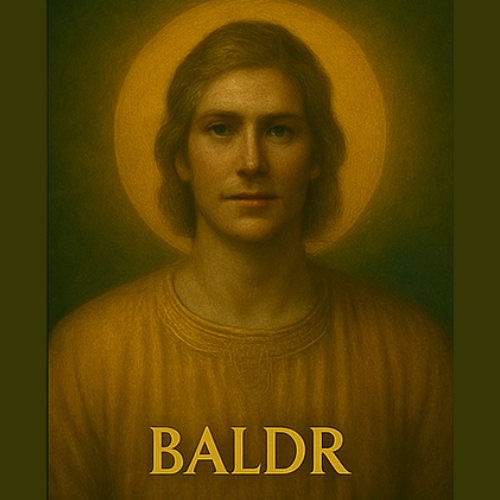
Their courtship began as part of the cosmic compensation required when the Æsir killed Skaði's father Thjazi, offering her the choice of a husband from among the gods as part of the weregild settlement. Her selection of Njörðr, based only on seeing the gods' feet and choosing the most beautiful pair (which she mistakenly thought belonged to Baldr), illustrates both the role of fate and misunderstanding in shaping significant relationships and the cosmic irony that often characterizes divine romance.
Their marriage agreement, involving alternating residence between his coastal hall Nóatún and her mountain dwelling, represented an attempt to honor both partners' essential natures while creating conditions for mutual benefit and shared experience. This arrangement demonstrates the principle that authentic partnership must accommodate fundamental differences rather than demanding that one partner abandon their essential nature for the other's convenience or preference.
Yet their experiment in shared residence revealed the deep incompatibilities that can exist even between beings who respect and appreciate each other's qualities and contributions. Skaði's discomfort with the coastal sounds of waves and seabirds, combined with Njörðr's inability to tolerate the mountain cold and wolf-howls, illustrates how environmental preferences can reflect spiritual requirements that cannot be easily compromised or modified through good intentions alone.
Their eventual separation, conducted with mutual respect and without bitterness, established important principles about the relationship between love and compatibility, between appreciation and practical partnership, between honoring others' qualities and being able to live comfortably with the daily reality of those qualities. Their amicable divorce demonstrates that authentic spiritual maturity sometimes involves recognizing incompatibility rather than forcing artificial harmony.
The cultural significance of their failed marriage influenced Norse concepts of partnership, compatibility, and the importance of environmental harmony in relationship success. Their example taught that genuine love and mutual respect may not be sufficient to overcome fundamental differences in lifestyle requirements, that authentic relationships must serve both partners' essential natures rather than demanding sacrifice of core needs or preferences.
His earlier marriage to Nerthus (according to some traditions) or his partnership with the unnamed earth goddess who bore his children represents the more successful union between sea and land, between maritime consciousness and terrestrial fertility, demonstrating the principle that compatible partnerships enable both individuals to fulfill their cosmic functions more effectively while creating beneficial outcomes that serve purposes greater than individual satisfaction.
Authority: Njörðr wielded dominion over maritime forces and coastal abundance, commanding respect not through dramatic displays of power but through the consistent provision of favorable winds, safe harbors, and the prosperous conditions that enable maritime commerce and cultural exchange to flourish. His authority was both gentle and essential—gentle because it worked with rather than against natural rhythms and inclinations, essential because coastal civilizations depended entirely on his blessing for survival and prosperity. Every successful voyage honored his guidance, every profitable trade reflected his favor, and every peaceful resolution of maritime disputes demonstrated his influence on beneficial cooperation.
Wisdom: The Lord of Winds possessed the flowing intelligence that understands the complex relationships between atmospheric conditions, ocean currents, and the timing that governs all beneficial exchanges. His wisdom was both practical and visionary, both immediately applicable to navigation and trade, and broadly relevant to understanding the principles that govern circulation and abundance in all their forms. He understood that authentic prosperity requires patience and proper timing, that genuine wealth serves distribution rather than accumulation, and that sustainable abundance depends on maintaining harmonious relationships with the natural forces that enable all circulation.
Desire: Njörðr's deepest longing was for the establishment of flowing networks that would enable all coastal communities to share their unique resources and cultural achievements, creating webs of mutual prosperity rather than isolated pockets of local wealth or competitive accumulation. His desire extended beyond mere material exchange to encompass the circulation of wisdom, artistic inspiration, and the cultural innovations that enhance life for all participants in maritime civilization.
Patience: Perhaps Njörðr's most distinctive quality was his infinite patience—the willingness to work with natural rhythms rather than demanding immediate results, the understanding that beneficial changes often require extended time to manifest fully, and the wisdom that recognizes apparent delays as necessary preparation for more substantial and lasting achievements. His patience was both strategic and spiritual, both practically intelligent and deeply trusting of cosmic timing and natural processes.
Flow: Above all, Njörðr embodied the divine principle of beneficial circulation—the understanding that authentic abundance must keep moving to remain healthy, that genuine wealth serves as a medium of exchange rather than an object of possession, and that sustainable prosperity depends on facilitating rather than hindering the natural flow of resources, opportunities, and beneficial relationships between different communities and regions.
Harmony: Njörðr represented the cosmic principle that authentic authority emerges from cooperation with rather than domination of natural forces, that genuine power facilitates rather than controls the beneficial exchanges that enable mutual prosperity. His approach to governance demonstrated that effective leadership often involves creating conditions where beneficial outcomes can occur naturally rather than attempting to force specific results through intervention or manipulation.
Generosity: Njörðr's approach to wealth embodied the principle that authentic abundance multiplies when shared rather than being diminished by distribution, that genuine prosperity serves circulation rather than accumulation, and that the highest forms of wealth enable others' success rather than merely demonstrating personal achievement or accumulating individual advantages that cannot be enjoyed by others or contributed to collective welfare and development.
Njörðr's relationships throughout the divine and mortal realms consistently reflected his role as the facilitating god whose gentle authority and abundant resources served to create networks, systems, and institutions that would enable beneficial exchanges and mutual prosperity throughout the maritime world. His fertility was both literal and commercial, generating not only divine children and favorable conditions but also the trade relationships, navigation techniques, and cultural exchanges that would connect diverse communities and enable civilization to flourish along coastlines and waterways.
His most important creative achievement was the generation of his twin children Freyr and Freyja, who inherited different aspects of his comprehensive authority over prosperity and abundance. Freyr embodied the terrestrial applications of Vanir wisdom—agricultural fertility, peaceful governance, and the generous leadership that serves community welfare. Freyja manifested the transformative aspects of abundance—the magical arts that can reshape reality, the erotic power that creates new possibilities, and the fierce independence that refuses to be possessed or controlled.
His relationship with coastal communities throughout Scandinavia produced cultural offspring in the form of maritime traditions, navigation techniques, and the commercial practices that enable mutually beneficial trade rather than exploitative extraction. His influence on fishing and sailing communities established patterns that honor both human needs and oceanic integrity, demonstrating that sustainable prosperity requires respectful partnership with rather than domination of natural systems.
His patronage of merchants and traders created institutional offspring in the form of commercial networks, fair trading practices, and the economic systems that enable prosperity to circulate rather than stagnate in isolated accumulations. His guidance influenced the development of markets, currency systems, and the diplomatic protocols that enable different communities to exchange their unique resources while maintaining their cultural identities and autonomy.
His protection of travelers and cultural exchanges produced spiritual offspring in the form of communication networks, language development, and the artistic traditions that emerge when different cultures interact peacefully and creatively. His blessing on voyages of exploration and cultural exchange established the principle that authentic progress emerges from mutual learning rather than conquest or forced assimilation.
The prosperity traditions associated with his worship developed comprehensive approaches to resource management that balance individual initiative with collective responsibility, recognizing that sustainable abundance requires systems that serve both immediate needs and long-term environmental health. His gifts to human civilization included both practical knowledge about working with maritime forces and the spiritual wisdom necessary for ensuring that prosperity serves beneficial rather than harmful purposes.
His continuing influence throughout coastal Scandinavia demonstrates the enduring relevance of his understanding that authentic wealth flows like water, reaching all who position themselves to receive it while never being diminished by generous distribution. His principles remain relevant to contemporary challenges involving global trade, environmental sustainability, and the creation of economic systems that serve both human development and oceanic health.
His relationship with contemporary environmental and maritime movements reflects his ancient wisdom that authentic prosperity must enhance rather than degrade the natural systems that support all life, demonstrating that the principles he embodied provide guidance for creating sustainable relationships between human activity and oceanic ecosystems.
The Marriage and Separation from Skaði: The most psychologically complex myth describes how Njörðr married the mountain goddess Skaði as part of the compensation offered by the Æsir for killing her father, and their subsequent attempt to live together by alternating between his coastal hall and her mountain dwelling. Their experiment revealed fundamental incompatibilities—he could not tolerate the cold and the howling of wolves in the mountains, while she found the coastal sounds of waves and seabirds disturbing to her mountain-adapted sensibilities. Their amicable separation, conducted with mutual respect and understanding, established important principles about the relationship between love and compatibility, demonstrating that genuine affection and appreciation may not be sufficient to overcome fundamental differences in environmental needs and lifestyle requirements.
The Exchange of Hostages and Peace with the Æsir: When the cosmic war between Vanir and Æsir threatened to destroy both divine tribes, Njörðr played a crucial role in negotiating the peace treaty that would end hostilities and establish beneficial cooperation between different approaches to divine authority. As part of the agreement, he and his children were given as hostages to the Æsir, while Hoenir and Mimir were sent to the Vanir. Rather than representing defeat or assimilation, this exchange enabled the integration of Vanir wisdom about prosperity and abundance with Æsir knowledge of governance and defense, demonstrating that authentic resolution of conflicts requires mutual respect and the sharing of different types of expertise rather than the dominance of one perspective over another.
The Establishment of Maritime Commerce and Navigation: When early human communities needed to travel across water for trade and cultural exchange but lacked the knowledge necessary for safe oceanic travel, Njörðr manifested in various forms to teach selected individuals the arts of reading wind patterns, understanding ocean currents, and navigating by celestial signs. His instruction included not only practical techniques but also the spiritual wisdom necessary for maintaining proper relationship with maritime forces, the ethical principles that should govern trade relationships, and the understanding that sustainable prosperity requires cooperation rather than exploitation. This gift of maritime wisdom established the foundation for global commerce and cultural exchange while teaching that technological capability must be balanced with environmental responsibility and social ethics.
Njörðr's worship centered around coastal temples and harbor shrines throughout Scandinavia where his presence was honored through ceremonies that celebrated both the abundance that flows through maritime trade and the natural harmony that enables sustainable relationships with oceanic forces. His primary cult sites were often located at harbors, fjord mouths, and other coastal locations where the intersection of land and sea created the liminal spaces where his authority was most directly accessible.
His priesthood included both maritime specialists who understood navigation, weather patterns, and the practical arts of sailing and fishing, and prosperity counselors who could guide communities in the development of trade relationships and economic systems that would enable sustainable abundance. These religious practitioners served as advisors for commercial ventures, mediators for trade disputes, and weather-readers who could provide guidance for maritime activities.
Sacred rituals included elaborate harbor ceremonies that invoked his blessing on voyages and fishing expeditions, seasonal festivals that celebrated the return of favorable sailing weather, and prosperity rituals that sought his guidance for trade ventures and community development projects. The most important annual observances occurred during the spring launch of fishing and trading seasons and the autumn celebrations of successful harvests and profitable voyages.
His sacred symbols reflected different aspects of his maritime authority and beneficial influence: ships and boats represented his protection of voyages and travelers, anchors symbolized safe harbor and security, fishing nets honored his provision of oceanic abundance, and various wind instruments celebrated his control over favorable sailing conditions. Sacred colors included blue and green (representing sea and wind), white (symbolizing favorable weather and safe passage), and gold (marking the prosperity that flows through beneficial trade).
His festivals involved entire coastal communities in elaborate celebrations that combined religious devotion with maritime education and commercial planning. These events featured boat races and sailing competitions, trade fairs that honored his commercial blessings, storytelling that preserved navigation knowledge and weather lore, and communal feasts that strengthened social bonds while celebrating the abundance that flowed through his blessing.
Local shrines throughout Scandinavia's coastal regions maintained his daily worship through practices that integrated maritime work with spiritual development: morning prayers that requested favorable winds and safe passage for the day's activities, offerings of first catches and portions of trading profits that maintained connection to his abundant provision, and evening ceremonies that honored successful completion of voyages while seeking his protection for future endeavors.
His mysteries preserved advanced knowledge of navigation techniques, weather prediction, and the arts of beneficial commerce that enabled initiates to serve as master sailors, successful traders, and community leaders who understood both the practical requirements and ethical responsibilities that characterize authentic maritime prosperity and sustainable coastal development.
Njörðr's influence on Norse philosophical thought about prosperity, circulation, and the relationship between human activity and natural forces was profound and enduring, establishing crucial principles about the nature of authentic wealth, beneficial commerce, and sustainable development that guided Scandinavian concepts of trade, navigation, and coastal community organization. He embodied the revolutionary concept that genuine prosperity flows like water, reaching all who position themselves to receive it while never being diminished by generous distribution, that authentic wealth serves circulation rather than accumulation, and that sustainable abundance depends on cooperation with rather than exploitation of natural systems.
His role as the facilitating god who enables beneficial exchanges without seeking to control their outcomes provided the philosophical framework for understanding the relationship between authority and service, between power and facilitation, between individual success and collective prosperity. His example demonstrated that authentic leadership often involves creating conditions where beneficial exchanges can occur naturally rather than attempting to force specific results, that genuine authority serves circulation rather than accumulation, and that effective governance facilitates rather than controls the natural flow of resources and opportunities.
The principle that emerged from his worship—that authentic abundance must keep flowing to remain healthy—influenced Norse concepts of wealth, success, and social responsibility that recognized stagnation as the enemy of prosperity, accumulation as potentially destructive of the very abundance it seeks to preserve. His example taught that genuine wealth multiplies when shared rather than being diminished by distribution, that sustainable prosperity requires systems that serve circulation rather than extraction, and that authentic success enables others' achievements rather than preventing them.
His synthesis of maritime wisdom with commercial ethics established crucial concepts about the relationship between technological capability and moral responsibility that influenced Scandinavian approaches to trade, exploration, and cultural exchange. His influence taught that authentic progress requires both practical competence and ethical development, that genuine innovation serves beneficial purposes rather than mere personal advantage, and that sustainable commerce must honor both human needs and environmental integrity.
His emphasis on patience and natural timing influenced philosophical thinking about the relationship between individual will and cosmic rhythms, establishing understanding that authentic achievement requires cooperation with rather than opposition to natural forces and timing. His legacy encouraged recognition that genuine success often requires extended time for development, that lasting prosperity emerges from working with rather than against natural patterns, and that sustainable abundance requires the wisdom to recognize and respect the timing that governs all beneficial exchanges.
His approach to marriage and partnership, particularly his respectful separation from Skaði, influenced concepts of compatibility, mutual respect, and the proper relationship between love and practical partnership. His example provided philosophical foundation for understanding that genuine affection may not be sufficient to overcome fundamental incompatibilities, that authentic relationships must honor both partners' essential natures, and that spiritual maturity sometimes involves recognizing limitations rather than forcing artificial harmony.
In contemporary Scandinavian and international thought, Njörðr's legacy continues to provide resources for understanding sustainable commerce, environmental ethics, and the integration of economic prosperity with natural system health. His example offers guidance for creating trade relationships that serve mutual benefit rather than exploitation, for developing technologies that enhance rather than degrade natural systems, and for achieving prosperity that flows rather than stagnates, serves rather than hoards, and enhances rather than diminishes the natural abundance that supports all life.
In traditional Norse art, Njörðr appears as the embodiment of tranquil authority and maritime wisdom, typically portrayed as a dignified figure whose iconography emphasizes his roles as sea god, wind master, and patron of prosperous commerce. His artistic representations consistently feature symbols of his oceanic domain and beneficial influence: ships and boats that represent his protection of voyages, anchors that symbolize safe harbor, fishing implements that honor his provision of oceanic abundance, and the calm, patient expression that suggests both deep wisdom and gentle accessibility.
Runestone carvings and maritime decorations frequently depict him in poses that suggest both authority and service: blessing departing vessels, calming stormy seas, or presiding over harbor activities with the serene dignity that characterizes beneficial leadership. These artistic representations emphasize his facilitating nature and peaceful authority while demonstrating the integration of divine power with practical service to human needs and natural harmony.
Ritual objects associated with his worship—ship models, anchors, fishing equipment, and harbor shrine decorations—represent both functional items used in maritime activities and ceremonial artifacts that invoke his presence and blessing. These objects demonstrate the principle that authentic spiritual practice integrates sacred and secular activities, that genuine devotion expresses itself through excellent work as well as formal religious observance.
Architectural traditions honor Njörðr through the design of coastal temples, harbor shrines, and maritime community centers that provide both practical facilities for sailors and traders and spiritual environments where his presence can be accessed and his guidance received. These structures often feature elements that suggest water flow, wind movement, and the open accessibility that characterizes beneficial commerce and cultural exchange.
Contemporary Scandinavian artists continue to find inspiration in Njörðr's synthesis of natural harmony with human prosperity, often portraying him in works that explore themes of sustainable development, maritime culture, and the integration of traditional wisdom with contemporary environmental challenges. Modern interpretations frequently emphasize his relevance to current issues of ocean conservation, sustainable fishing, and the development of economic systems that serve both human welfare and marine ecosystem health.
International environmental and maritime movements have adopted Njörðr as a symbol of sustainable ocean stewardship, beneficial commerce, and the integration of human activity with natural system health. Contemporary artistic interpretations often emphasize his role as patron of all who seek to create prosperity through cooperation with rather than exploitation of natural forces, particularly oceanic and atmospheric systems.
Coastal and maritime communities throughout the world have developed new artistic traditions that honor him as the divine patron of sustainable fishing, responsible shipping, and the preservation of oceanic abundance for future generations. These contemporary expressions demonstrate both the universal relevance of his principles and the adaptability of authentic environmental wisdom to different cultural contexts and contemporary challenges.
Digital and multimedia art forms have found new ways to represent his flowing authority, maritime wisdom, and beneficial influence through interactive installations, virtual reality experiences that simulate ocean environments, and other technologies that can teach both traditional seamanship and contemporary understanding of oceanic systems while honoring his principles of cooperation with natural forces and circulation of abundance.
"Njörðr! Vindáss! Nóatúns Vísi!"
("Njörðr! Wind-God! Ruler of Nóatún!")
"When favorable winds fill the sails of prosperity and oceanic abundance flows to every shore, when gentle authority guides through natural harmony, wise Njörðr rises with the blessing of safe harbors and the golden tide of beneficial exchange!"
"Njörðr vindáss, vísi sævar,
Nóatúns náðugr, næmr guð,
Kom með kæru, kunnandi!"
("Njörðr wind-god, ruler of sea,
Generous of Nóatún, knowing god,
Come with care, wise one!")
"O Njörðr, Gentle Lord and Master of Favorable Winds,
You whose patient wisdom governs oceanic abundance,
You who facilitate beneficial exchange while honoring natural harmony,
Grant us the wisdom to work with rather than against natural forces,
The patience to allow beneficial changes to unfold in their proper timing,
The generosity to share prosperity rather than hoarding it,
And the gentle authority that serves circulation rather than accumulation.
May your favorable winds carry our efforts toward beneficial outcomes,
Your oceanic abundance flow through our communities and relationships,
Your tranquil harbor provide safety during storms of change,
And your flowing wisdom remind us that authentic wealth
Multiplies when shared rather than diminished by distribution.
Vindáss Njörðr, teach us to lead as you lead—
Through facilitation rather than control,
Through patience rather than force,
And through the understanding that genuine prosperity
Flows like water, reaching all while diminishing none."
