


 Mars
Mars
 Metal
Metal




Divine Power
Patron of warriors, blacksmiths, and progress.

Patron of warriors, blacksmiths, and progress.
In the primordial epoch when the cosmic forces required a deity who could bridge the gap between divine inspiration and material implementation, when the world needed a god who could transform spiritual visions into practical realities through the mastery of metal, fire, and the technologies that enable civilization to flourish, there emerged from the marriage of earth's iron-rich blood and heaven's lightning-fire a deity whose powerful presence would become synonymous with skilled craftsmanship, protective warfare, and the relentless determination that overcomes all obstacles—Ogun, whose name resonates with the ring of hammer on anvil and whose essence embodies the divine principle that converts raw potential into useful tools, transforms theoretical knowledge into practical application, and channels aggressive energy toward constructive purposes that serve both individual development and collective prosperity.
The most sacred oral traditions preserved in the forges and workshops of Yorubaland speak of Ogun's emergence as the cosmic moment when divine consciousness first recognized the necessity of working with rather than against material resistance, when the spiritual realm required a representative who could demonstrate that authentic power manifests through skilled labor, persistent effort, and the patient mastery of techniques that enable consciousness to shape matter according to beneficial purposes.
Unlike other Orishas who emerged through gentle unfolding or dramatic birth ceremonies, Ogun manifested through the primordial act of creation-through-destruction that characterizes all metalworking—the violent extraction of iron from ore, the intense heat that melts and purifies, the forceful hammering that shapes raw metal into useful forms. His birth was simultaneously destructive and creative, both aggressive and nurturing, both individual and collective in its implications for cosmic development.
The sacred narratives describe how his first manifestation occurred when the other Orishas, having descended to earth to begin their various cosmic assignments, found themselves trapped by an impenetrable forest of thorns and vegetation that blocked all paths and prevented progress toward their destinations. None of their individual powers—neither Obatala's creative wisdom nor Shango's thunderous authority nor Oya's fierce winds—could clear the obstacles that prevented them from fulfilling their divine missions.
Ogun's response to this cosmic crisis revealed the essential nature that would characterize all his subsequent activities: rather than attempting to bypass or negotiate with the obstacles, he forged the first machete and began the patient, dangerous work of cutting through the barriers that prevented progress. His willingness to undertake this difficult, unglamorous, but absolutely necessary labor established him as the divine pioneer whose efforts enable others to achieve their goals and fulfill their cosmic purposes.
Yet his role as pathclearer was never merely destructive, for the traditions emphasize that his cutting always served constructive purposes—creating roads that would enable commerce and communication, clearing land that could be cultivated for agriculture, removing obstacles that prevented the establishment of communities where conscious beings could develop their potential through cooperation and mutual support.
From his initial manifestation, Ogun embodied the fundamental principle that would define his eternal significance: the understanding that authentic progress requires the courage to engage directly with material resistance, that genuine achievement emerges from skilled labor rather than mere inspiration, and that the highest forms of service often involve undertaking the difficult, dangerous work that enables others to accomplish their goals while receiving recognition and gratitude that may not be proportional to the essential nature of the contribution made.
Divine Lineage: Born from the primordial marriage between earth's metallic essence and heaven's transformative fire, establishing his unique authority over metallurgy and technology
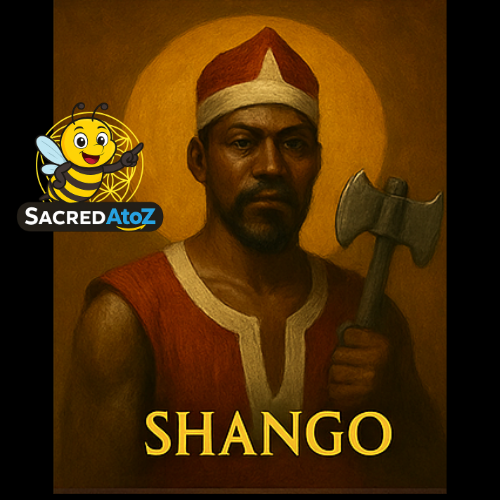
Brothers: Shango (thunder god) and other warrior Orishas who share his commitment to protective action and dynamic intervention
Wives: Various goddesses including Oya (briefly, before she joined Shango's household) and other deities who appreciate his protective strength and skilled craftsmanship
Children: Numerous spirits who govern specific aspects of metalworking, warfare, and technological development
Cultural Offspring: All blacksmiths, metalworkers, warriors, hunters, and technology specialists who carry forward his traditions
Spiritual Descendants: Drivers, mechanics, surgeons, and all who use metal tools in service of beneficial purposes
Animal Companions: Dogs (representing loyalty and protective instincts), roosters (symbolizing courage and dawn vigilance), and various forest animals he encountered during his pathclearing work
Sacred Implements: All iron and steel tools, weapons, and implements that serve constructive purposes in agriculture, craftsmanship, and community protection
Divine Associates: Eshu (who opens paths for his pioneering work), Osanyin (herbs and forest medicines), and Orunmila (wisdom that guides technological application)
Human Lineages: Warrior clans, craft guilds, and technological innovators who preserve his knowledge and embody his principles of skilled labor and protective service
Ogun's approach to romantic relationships reflects his fundamental nature as the deity whose primary commitment is to the ongoing work of creation-through-transformation, the patient labor that converts raw materials into useful forms, and the protective service that defends communities against threats while enabling productive activities to flourish. His marriages and partnerships represent collaborative efforts to achieve cosmic purposes rather than conventional domestic arrangements focused primarily on personal satisfaction or social status.
His most significant relationship was his brief but passionate marriage to Oya, the wind goddess whose fierce independence and transformative power complemented his own dynamic energy while challenging his sometimes possessive tendencies. Their union represented the cosmic partnership between the cutting edge that clears obstacles and the wind that carries away debris, between the technological innovation that creates new possibilities and the revolutionary spirit that sweeps away outdated systems.
Yet their relationship also revealed the tensions that arise when two powerful, independent forces attempt to coordinate their activities without either sacrificing essential aspects of their nature. Oya's eventual departure to join Shango's household taught Ogun important lessons about the difference between possession and partnership, between protective care and controlling domination, between authentic love that enables freedom and possessive attachment that constrains development.
His subsequent relationships with various goddesses and human women demonstrated his evolving understanding of how to channel his protective instincts and passionate energy toward relationships that enhanced rather than limited his partners' autonomy and development. These partnerships typically involved collaborative work projects—establishing new communities, developing innovative technologies, or creating systems that would benefit entire regions rather than merely advancing personal interests.
His relationship with his work represents a form of cosmic marriage that transcends conventional romantic categories, demonstrating the principle that authentic spiritual development sometimes requires such complete dedication to service that personal relationships, while valued and honored, remain secondary to the cosmic responsibilities that define one's essential purpose and contribution to universal welfare.
The cultural significance of his approach to relationships influenced Yoruba concepts of marriage, partnership, and the proper balance between individual autonomy and mutual commitment. His example demonstrated that authentic love requires respect for each partner's essential nature and cosmic responsibilities, that healthy relationships must accommodate different approaches to service and contribution, and that sustainable partnerships emerge when both individuals contribute their unique gifts while supporting each other's continued development.
His ongoing availability to assist anyone who calls upon him for help with technological challenges or protective needs represents the principle that authentic masculine energy serves community welfare rather than merely pursuing personal satisfaction, that genuine strength protects and enables rather than dominating or exploiting those who seek assistance and guidance.
Authority: Ogun wielded technological supremacy over all processes involving metal, fire, and the transformation of raw materials into useful implements, commanding not through political position or inherited status but through demonstrated competence, reliable service, and the kind of essential contribution that communities cannot survive without. His authority was both practical and spiritual—practical because his skills and knowledge were necessary for survival and prosperity, spiritual because his work connected material activities to cosmic purposes and divine principles. Every well-forged tool honored his techniques, every successful technological innovation reflected his inspiration, and every act of skilled craftsmanship demonstrated his continuing influence on human cultural development.
Wisdom: The Iron King possessed the practical intelligence that emerges from direct engagement with material resistance, hands-on experience with the challenges of transforming theory into application, and the accumulated knowledge that comes from years of patient experimentation and gradual mastery. His wisdom was both technical and philosophical, both immediately applicable and broadly relevant to understanding the relationship between consciousness and matter, intention and implementation, vision and achievement.
Desire: Ogun's deepest longing was for the creation of tools, technologies, and systems that would enable conscious beings to achieve their highest potential while serving purposes greater than narrow self-interest, for the development of innovations that would enhance rather than diminish human dignity and environmental sustainability, and for the kind of progress that serves authentic prosperity rather than mere accumulation or display of wealth and power.
Wrath: When Ogun's anger was aroused—typically by laziness that prevented necessary work from being completed, incompetence that wasted resources and endangered lives, injustice that exploited workers or misused technology for harmful purposes, or cowardice that failed to defend those who needed protection—his fury manifested as devastating technological failures, weapons that turned against their users, or the withdrawal of his essential skills from communities that had violated his principles. His wrath was both corrective and educational, designed to restore proper relationships between effort and reward, competence and authority, technological capability and moral responsibility.
Determination: Perhaps Ogun's most distinctive quality was his relentless persistence—the refusal to abandon difficult projects before completion, the willingness to continue working despite setbacks and obstacles, and the understanding that authentic achievement requires sustained effort over extended periods rather than expecting immediate results or dramatic breakthroughs. His determination was both inspiring and sometimes overwhelming, both motivating and occasionally insensitive to human limitations and the need for rest and renewal.
Craftsmanship: Above all, Ogun embodied the divine principle that authentic mastery emerges through patient practice, careful attention to detail, and the integration of technical skill with spiritual understanding, demonstrating that genuine expertise serves beneficial purposes rather than mere personal recognition, that sustainable innovation requires both creativity and respect for established principles that have proven their worth through testing and application.
Protection: Ogun represented the fierce protective energy that defends communities against external threats while enabling internal development and growth, the warrior spirit that fights for justice rather than merely pursuing victory, and the technological innovation that serves defensive rather than aggressive purposes, creating tools and systems that enhance security while promoting rather than undermining peaceful cooperation and mutual prosperity.
Ogun's relationships throughout the divine and mortal realms consistently reflected his role as the cosmic innovator whose technological mastery and protective energy served to create tools, systems, and institutions that would enable communities to prosper while defending themselves against threats to their welfare and continued development. His fertility was both literal and technological, generating not only divine and human children but also the innovations, techniques, and cultural institutions that would advance human civilization while maintaining harmony with natural systems and cosmic principles.
His divine offspring included various spirits who specialized in different aspects of his comprehensive authority over technology and protection: iron spirits who governed specific metalworking techniques, war deities who protected particular communities or regions, forest spirits who guided hunters and woodworkers, and technological innovators who inspired the development of new tools and methods that would enhance human capability while serving beneficial purposes.
His relationships with human communities produced cultural offspring in the form of craft guilds, warrior societies, and technological traditions that preserved and transmitted his knowledge across generations. His influence on blacksmiths, metalworkers, and other craftspeople created lineages of practitioners who embodied his principles of skilled labor, ethical application of technology, and service to community welfare rather than mere personal profit or recognition.
His protection of drivers, mechanics, surgeons, and all who use metal tools in their work demonstrates his ongoing relevance to contemporary technological activities, showing how his ancient authority adapts to new forms of technology while maintaining essential principles about the relationship between technical competence, moral responsibility, and service to beneficial purposes.
His mentorship of warriors and hunters established traditions of defensive capability that serve community protection rather than aggressive expansion, teaching that authentic strength defends the vulnerable against oppression while avoiding the kind of violence that creates cycles of revenge and escalating conflict. His influence on military and police forces emphasizes the principle that legitimate force serves justice rather than mere power.
The healing traditions associated with his worship developed therapeutic applications of his knowledge about metals, herbs, and the technologies that can serve medical purposes, recognizing that his authority over iron extends to understanding how metal implements can assist surgical procedures and how technological innovation can enhance rather than replace traditional healing methods.
His continuing influence throughout the African diaspora demonstrates the adaptability of his essential principles to different technological environments and cultural contexts. His worship in industrialized societies shows how ancient wisdom about the relationship between human consciousness and technological capability remains relevant to contemporary challenges involving automation, environmental sustainability, and the ethical application of advanced technologies.
His relationship with contemporary environmental movements reflects his understanding that authentic technological development must enhance rather than degrade natural systems, that sustainable innovation requires integration of technical capability with ecological wisdom, and that genuine progress serves the welfare of future generations rather than merely satisfying immediate desires for convenience or material accumulation.
The Clearing of the Primordial Forest: The most foundational myth describes how Ogun, when the other Orishas found themselves unable to reach earth because their path was blocked by an impenetrable forest of thorns and obstacles, forged the first iron machete and spent years cutting through the barriers that prevented divine work from proceeding. His solitary labor, performed without assistance or recognition while others waited safely in heaven, established the cosmic principle that progress often requires individuals willing to undertake difficult, dangerous work that enables others to achieve their goals. When he finally cleared the path and called the other Orishas to descend, they found roads, cleared land, and infrastructure that made their various missions possible. This myth teaches that authentic leadership often involves performing unglamorous but essential tasks, that genuine service may not receive proportional recognition, and that the most important contributions to civilization are often made by those who work directly with material challenges rather than merely offering advice or inspiration.
The Tragic War Against His Own People: The most psychologically complex myth describes how Ogun, returning from a long journey to find his own people celebrating a festival while wearing masks and costumes that made them unrecognizable, mistook them for enemies and in his warrior fury killed many of them before discovering his terrible error. His horror and grief at this tragedy led him to retreat into the forest, vowing never again to engage in warfare except when absolutely necessary for defensive purposes. This myth explores themes of the double-edged nature of strength and protective instincts, the importance of clear communication and proper identification before taking action, and the tragic consequences that can result when good intentions are misdirected through misunderstanding or inadequate information. The story establishes important principles about the responsible use of force and the necessity of tempering warrior energy with wisdom and restraint.
The Gift of Ironworking to Humanity: When early human communities lacked the knowledge necessary for working with metals and remained limited to stone and wooden tools that could not effectively clear land, build substantial structures, or provide adequate defense against threats, Ogun descended to earth disguised as a wandering craftsman and established the first forge. He taught selected individuals the secrets of extracting iron from ore, the techniques for heating and shaping metal, and the skills necessary for creating tools and weapons that would enable agricultural development and community protection. Before departing, he established the sacred traditions that would govern metalworking—the rituals that honor the spirits of iron, the ethical principles that prevent technology from being used for harmful purposes, and the guild structures that would preserve and transmit technical knowledge while maintaining quality standards and mutual support among practitioners.
Ogun's worship centers around forge shrines and metalworking centers throughout Yorubaland where his presence is honored through the daily practice of skilled craftsmanship, the creation of tools and implements that serve beneficial purposes, and community ceremonies that celebrate both technological achievement and the ethical principles that govern authentic innovation. His primary sanctuaries include both traditional forges where ancient techniques are preserved and contemporary workshops where his authority adapts to modern technological challenges.
His priesthood includes both master craftspeople who preserve traditional metalworking knowledge and spiritual specialists who understand the relationship between technical skill and cosmic purpose. These religious practitioners serve as teachers, quality control inspectors, and ethical guides who ensure that technological development serves beneficial purposes while maintaining the high standards of craftsmanship and moral responsibility that characterize authentic service to his principles.
Sacred rituals include elaborate forge ceremonies where new practitioners are initiated into the mysteries of metalworking, blessing rituals for tools and weapons that invoke his protection for their users, and community celebrations that honor both individual achievement and collective prosperity enabled by technological innovation. The most important annual observance involves the renewal of his sacred forge and the public demonstration of mastery levels that maintain guild standards and community confidence in technological competence.
His sacred symbols reflect different aspects of his technological and protective authority: iron implements represent his mastery over metallurgy and his gifts to human civilization, dogs symbolize loyalty and protective vigilance, palm fronds honor his forest associations and his role as pathclearer, and various tools celebrate the diversity of applications for his technological knowledge. Sacred colors include black (representing iron and the transformative power of fire), red (symbolizing the heat of the forge and warrior energy), and green (marking his forest associations and environmental awareness).
His festivals involve entire communities in elaborate celebrations that combine religious devotion with technological education and economic activity. These events feature competitive metalworking demonstrations, displays of innovative tools and techniques, market activities that honor his commercial blessings, and communal activities that strengthen social bonds while celebrating the practical achievements that enable community prosperity and security.
Local shrines throughout Yorubaland and the diaspora maintain his daily worship through practices that integrate technological work with spiritual development: morning prayers that request guidance and protection for dangerous work, offerings of palm wine and kola nuts that maintain connection to his forest wisdom, and evening ceremonies that honor successful completion of projects while seeking his blessing for continued innovation and skill development.
His mysteries preserve advanced knowledge of metallurgy, engineering, and the practical arts that enable initiates to serve as master craftspeople, technological innovators, and community leaders who understand both the technical requirements and ethical responsibilities that characterize authentic technological development and application.
Ogun's influence on Yoruba philosophical thought about work, technology, and the relationship between material development and spiritual progress was profound and enduring, establishing crucial principles about the nature of authentic achievement, technological responsibility, and the integration of practical skill with ethical development that guided traditional African concepts of craftsmanship, innovation, and community service. He embodied the revolutionary concept that spiritual development requires engagement with rather than withdrawal from material challenges, that authentic wisdom emerges through hands-on experience with practical problems, and that the highest forms of service often involve the patient mastery of skills that enable others to achieve their goals and fulfill their potential.
His role as the divine craftsman who transforms raw materials into useful implements provided the philosophical framework for understanding the relationship between consciousness and matter, between vision and implementation, between theoretical knowledge and practical application. His example demonstrated that authentic creativity requires both inspiration and technical skill, both innovative vision and respect for established principles that have proven their effectiveness through testing and application.
The principle that emerged from his worship—that authentic progress requires direct engagement with material resistance rather than mere intellectual speculation—influenced Yoruba concepts of education, professional development, and spiritual practice that recognized practical competence as inseparable from theoretical understanding. His example taught that genuine mastery involves both conceptual clarity and hands-on experience, that sustainable innovation requires both creative vision and patient attention to technical details.
His synthesis of technological mastery with protective responsibility established crucial concepts about the relationship between capability and obligation that influenced traditional African approaches to skill development, community service, and the ethical application of knowledge and power. His influence taught that authentic expertise carries with it the responsibility to serve beneficial purposes, that genuine competence must be balanced with moral development, and that sustainable achievements require both individual excellence and commitment to collective welfare.
His emphasis on patient persistence and gradual mastery influenced philosophical thinking about the nature of learning, skill development, and spiritual growth that recognized authentic achievement as requiring sustained effort over extended periods rather than expecting immediate results or dramatic breakthroughs. His legacy encouraged understanding that genuine expertise emerges through practice rather than mere study, that lasting changes require gradual development rather than sudden transformation.
His role as pathclearer and pioneer influenced concepts of leadership, innovation, and social progress that recognized the necessity of individuals willing to undertake difficult, unglamorous work that enables others to achieve their goals. His example provided philosophical foundation for understanding that authentic leadership often involves service rather than command, that genuine innovation requires courage to engage with practical challenges rather than remaining within comfortable theoretical territories.
In contemporary African and international thought, Ogun's legacy continues to provide resources for understanding technological ethics, sustainable development, and the integration of traditional craftsmanship with modern industrial capabilities. His example offers guidance for creating technological systems that serve human dignity and environmental sustainability while demonstrating that authentic progress requires both technical competence and moral wisdom, both innovative capability and respect for natural systems and traditional knowledge.
In traditional Yoruba art, Ogun appears as the embodiment of dynamic strength and technological mastery, typically portrayed as a powerfully built figure whose iconography emphasizes his roles as divine blacksmith, warrior protector, and pathclearing pioneer. His artistic representations consistently feature symbols of his technological and martial authority: iron implements that represent his mastery over metallurgy, weapons that symbolize his protective function, palm fronds that honor his forest associations, and the strong, capable hands that demonstrate his commitment to skilled manual labor.
Wood carvings and bronze sculptures frequently depict him in poses of active work: forging metal at his anvil, clearing obstacles with his machete, or standing ready for battle in defense of his community. These artistic representations emphasize his dynamic, purposeful nature while demonstrating the integration of strength with skill, power with responsibility, that characterizes authentic technological and martial excellence.
Ritual objects associated with his worship—iron tools, weapons, forge implements, and shrine decorations—represent both functional items used in daily work and ceremonial artifacts that invoke his presence and blessing. These objects demonstrate the principle that authentic spiritual practice integrates sacred and secular activities, that genuine devotion expresses itself through excellent work as well as formal religious observance.
Architectural traditions honor Ogun through the design of forge buildings, workshops, and community centers that provide both practical facilities for metalworking and spiritual environments where his presence can be honored and his wisdom transmitted. These structures often incorporate both traditional design elements and functional innovations that demonstrate the integration of cultural preservation with technological development.
Contemporary African artists continue to find inspiration in Ogun's synthesis of technological mastery with spiritual purpose, often portraying him in works that explore themes of industrialization, worker rights, and the ethical application of technology to human development and environmental sustainability. Modern interpretations frequently emphasize his relevance to current issues of technological unemployment, industrial safety, and the need for innovation that serves human dignity rather than merely increasing efficiency or profit.
International artistic movements interested in the relationship between technology and spirituality have adopted Ogun as a symbol of conscious craftsmanship, ethical innovation, and the integration of manual skills with intellectual development. Contemporary artistic interpretations often emphasize his role as patron of all who work with their hands while serving purposes greater than personal advancement or material accumulation.
Diaspora artistic traditions in industrial societies have developed new interpretations that connect his ancient authority over iron and fire to contemporary technologies involving metals, machinery, and the various tools that enable modern industrial production. These adaptations demonstrate both his continuing relevance and the flexibility of authentic spiritual principles that can adapt to new technological environments while maintaining essential ethical and practical guidance.
Digital and multimedia art forms have found ways to represent his dynamic energy, technological innovation, and protective strength through interactive installations, kinetic sculptures, and virtual reality experiences that can simulate the forge environment while teaching both traditional metalworking techniques and contemporary applications of his principles to current technological challenges and opportunities.
"Ogun! Oba Oko! Osin Imale!"
("Ogun! King of War! Chief of the Forge!")
"When iron calls to iron and the forge-fire blazes with divine purpose, when obstacles demand the cutting edge of determination, mighty Ogun rises with the machete of progress and the hammer of transformation!"
"Ogun, oba oko, osin imale,
Alado, ode ija, baba wa,
Mo pe e wa, agbara irin!"
("Ogun, king of war, chief of the forge,
Owner of the machete, hunter of battles, our father,
I call you, power of iron!")
"O Ogun, Master of Iron and Divine Craftsman,
You who clear all paths through persistent labor,
You who transform raw metal into tools that serve life,
Grant us strength to persist through difficult work,
Skill to master techniques that serve beneficial purposes,
Courage to defend those who cannot protect themselves,
And wisdom to use our capabilities for constructive rather than destructive ends.
May your forge-fire inspire excellence in our craftsmanship,
Your cutting edge clear obstacles that prevent progress,
Your protective strength shield communities from harm,
And your tireless determination remind us that authentic achievement
Requires sustained effort, patient practice, and commitment
To serving purposes greater than personal recognition.
Ogun Alado, teach us to work with honor,
To innovate with responsibility, to protect with wisdom,
And to remember that all tools and technologies
Must serve the flourishing of life rather than its destruction."
