



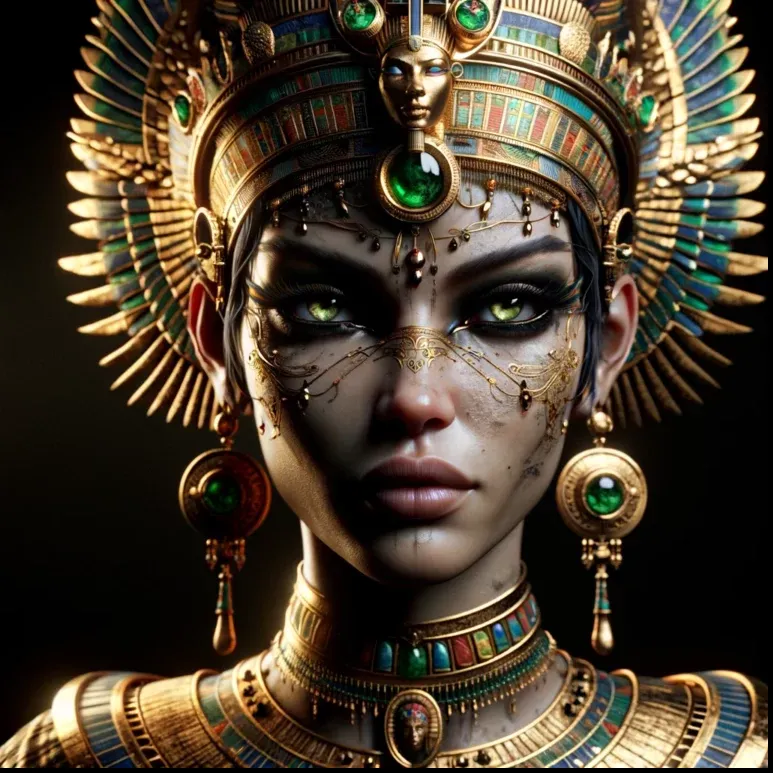
In Egypt, it was customary to mummify the deceased and create a likeness of them, often in the form of a mummy mask or an anthropoid (human-form) coffin.
From the first to third centuries AD, after Egypt had become a province of the Roman Empire, the traditional practice of mummification continued but a new trend also arose: some individuals chose to be represented in portraits painted on thin wooden panels or linen burial shrouds that were affixed to their mummy wrappings. These mummy portraits were part of ancient Egyptian traditions and their preparations for the afterlife.
“The portraits appear very Greco-Roman to our eyes, but they were incorporated into mummification burials and they mapped onto longstanding Egyptian beliefs and practices, which speaks to the complex cultural and artistic hybridization at work in their development and use—I think these are aspects of their significance that have yet to be fully explored. There’s still a lot we can learn from Romano-Egyptian mummy portraits,” said Sara E. Cole, assistant curator in the Antiquities Department.
Getty’s collection of remarkably lifelike mummy portraits from this period brings us face-to-face with the people who lived in Egypt under the Roman Empire.
“To be able to look at the face of someone who lived 2,000 years ago is extraordinary,” Cole said.
These objects reveal so much about the subjects represented in the portraits and how people lived at the time. “They can tell us about the people who lived in Roman Egypt and the socio-cultural context in which they were making decisions about how they wanted to be buried: the multicultural communities to which they belonged, the question of how they would have identified themselves, the fascinating blend of Egyptian funerary traditions and religion with new Greco-Roman styles of self-representation, and more,” she added.
They also provide clues and context to the artists and the materials they used. “How did they learn to paint in this style and select the specialized materials: the wood, pigments and binding media?” asked Marie Svoboda, conservator in the Department of Antiquities Conservation. “Some of the materials were locally sourced, while others imported from great distances. By looking at the portraits, you can also recognize the artistic style which reflects economics, skill and a profound relationship to the materials and tools used to create them.”
Discover more about these mummy portraits and the stories they tell, in the new Google Arts & Culture exhibition: Faces of Roman Egypt.
