


Precision Engineering in Predynastic Egypt

Article By Florimond Krins
posted by UK, February 28, 2026
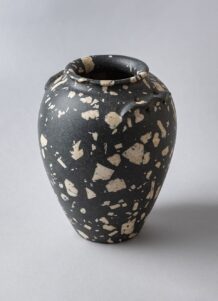
Stone jar with wavy handles, porphyritic andesite – Museo Egizio, Turin
Ancient Egypt remains a place of wonder and mystery, from the beautiful temple complexes to the impressive pyramids that have survived the test of time. One could spend years studying the great pyramids of the Giza plateau and observe the amazing achievements of the ancient Egyptians. But in this article, I want to focus on much smaller, yet incredible, artefacts.
Under the pyramid complex of Saqqara many ancient artefacts were found, amongst them tens of thousands of stone vases and vessels. Not a few, or a few hundreds, but thousands and thousands of them. I emphasize the sheer numbers, because it gives proof of an industry, a true savoir-faire dating back over five thousand years ago, during an age we call pre-dynastic, as it predates dynastic Egypt and the Old Kingdom. As such vessels are pretty common in almost every museum that have an Ancient Egypt collection, I invite you to look for them.
What distinguishes those vases from the many ancient vases and jars from antiquity and before is the material they are made of: stone, very hard stone, such as quartzite, granite and diorite. These stones are harder than modern steel. Yet tens of thousands were carefully crafted. Most common jars and vases from that period are made of clay and hardened through kiln fires. Some might be made of softer stones such as sandstone or alabaster and are still made today using simple, traditional methods.
In the last decade a group of engineers[1] have scanned a few of the hard stone vases to determine the methods and tools used to create them as well as the level of precision they were able to achieve. Marks of tubular drills showing traces of iron and titanium were found inside the vases, discrediting the current theory that the ancient Egyptian craftsmen used drills made of copper.
Another fascinating thing is the level of precision and symmetry of the vessels, ranging from a few hundredths of a millimetre to a few tens of thousandths of a millimetre, less than the width of human hair. And even if the smoothness of many of the vases can be explained with time and elbow grease, such levels of precision and consistency cannot be achieved without advanced tools and techniques. These vessels don’t seem to belong to a time when the wheel and metal tools were not supposed to be known.
After such observations it is easy to reach for far-fetched theories of aliens and lost advanced civilizations, denying in the process the achievement of the pre-dynastic Egyptians, by relegating them to an anomaly or something that only someone else could have done. But it is also disingenuous to say that this was done using primitive tools and techniques, while showing only drawings and experiments done with tools we know pre-dynastic Egyptians did not possess, such as turning wheels with ball bearings.
Over the past centuries, our vision of the ancient past has changed quite dramatically and archaeology is, like most sciences, a modern one. If we want such a field to advance, we need to allow for doubt, experimentation and corrections to be included in the process. Archaeology needs other scientists to help understand a past for which we only have very limited clues and remains.
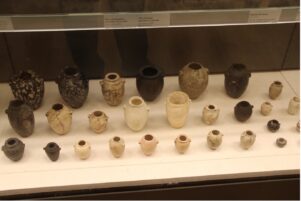
Ancient Egypt Predynastic Nagada Stone Vases, Louvre .
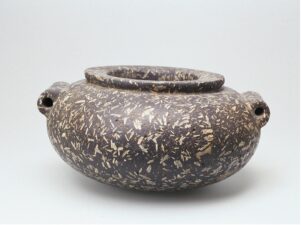
Stone Jar with Lug Handles
Early Dynastic Period
ca. 2960–2649 B.C.
Image Credits: By Museo Egizio in Turin | Wikimedia Commons | CC0 1.0, BY Gary Todd | Wikimedia Commons | CC0 1.0, BY Metmuseum.org | CC BY PD
The entity posting this article assumes the responsibility that images used in this article have the requisite permissions
Image References
Feature Image : By Museo Egizio in Turin | Wikimedia Commons | CC0 1.0
Image 1 : BY Gary Todd | Wikimedia Commons | CC0 1.0
Image 2 ; By Metmuseum.org | CC BY PD
Permissions required for the publishing of this article have been obtained
Article References
[1] www.artifactfoundation.org/
- Gnosis
- Mythos
- Rituals
- Wisdom
- Alchemy
- Prophecy
- Mystery
- Origins
- Divinity
- Awakening
- Cosmos
- Sacraments
- Light
- Truth
- Spirit
- Emanations
- Temple
- Legends
- Chronicles
- Revelations
- Creation
- Symbols
- Chakras
- Dreams
- Elements
- Guardians
- Mirrors
- Healing
- Frequencies
- Portals
- Codes
- Cycles
- Visions
- Temples
- Echoes
- Lightworkers
- Veil
- Ascension
- Runes
- Guardianship
